I would choose a DataBull alternative by starting with the payment flows you need to keep and the responsibility you’re willing to take on. I’d shortlist DataFast for managed revenue attribution, Umami for open-source instrumentation, and Grosslytics for supported Paddle, Razorpay or Lemon Squeezy webhooks and revenue after estimated fees. DataBull already supports first-touch and last-touch attribution, so those features alone are not a reason to replace it.
Key takeaways
- Choose by payment provider, hosting responsibility and revenue definition before comparing license prices.
- Grosslytics lists free source self-hosting, a $29 Lifetime option and $5.99/month hosting for 100,000 events; self-hosted infrastructure is separate.
- First-touch and last-touch are separate single-touch models; Grosslytics’ linear mode splits credit 50/50 between those endpoints.
- A lower software price is useful only if the replacement preserves the payment and refund flows you need.
What should a DataBull alternative improve?
A replacement should solve a concrete integration or operating-cost problem, rather than repeat features DataBull already provides.
Grosslytics is our product. This comparison draws on vendor documentation checked on November 8, 2026, and the Grosslytics implementation; the recommendations reflect the use cases described below.
DataBull’s attribution documentation lists first touch, last touch and last non-direct, plus renewal attribution and lifetime value. It is inaccurate to describe the product as having only one attribution choice.
Its payment setup documents Stripe, Polar, Dodo and Creem. If you use Paddle or Razorpay, ask whether a documented integration covers the exact checkout and subscription flow you operate.
Which five alternatives should you shortlist?
These five cover managed attribution, open-source instrumentation and reporting after fees; the list groups use cases rather than declaring an overall winner.
| Alternative | Why consider it | Published price | Payment approach | Main tradeoff |
|---|---|---|---|---|
| 1. DataFast | Managed revenue attribution | Starter from $9/month, Growth from $19 at entry volume; verify billing selection | Stripe, Lemon Squeezy, Polar, Shopify and Payment API | Larger event volumes require a larger plan |
| 2. Seline | Managed journeys and revenue | $9/month at 10k events; $24 at 100k | Stripe, Polar or custom revenue events | Recurring volume-based bill |
| 3. Grosslytics | Paddle, Razorpay and fee reporting | Source self-host free; $29 Lifetime; cloud $5.99/month at 100k events | Provider-specific webhooks | Estimated fees; gateway-specific refund limits |
| 4. Umami | Open-source control | Source self-host free; cloud Hobby $0 at 100k events, one site | Revenue events; Cloud payment integrations also advertised | Check Cloud plan eligibility versus self-hosted features |
| 5. PostHog | Product analysis with revenue | 1M analytics events/month free; other products metered separately | Stripe source or revenue events | More reporting configuration |
Sources: DataFast, Seline pricing, Grosslytics pricing, Umami pricing and PostHog pricing. Starting prices are not quotes for identical workloads.
1. DataFast: when you want managed attribution
DataFast fits a founder who prefers a managed service and whose gateway matches its native connections or Payment API. Its Growth plan documents social mentions and link attribution.
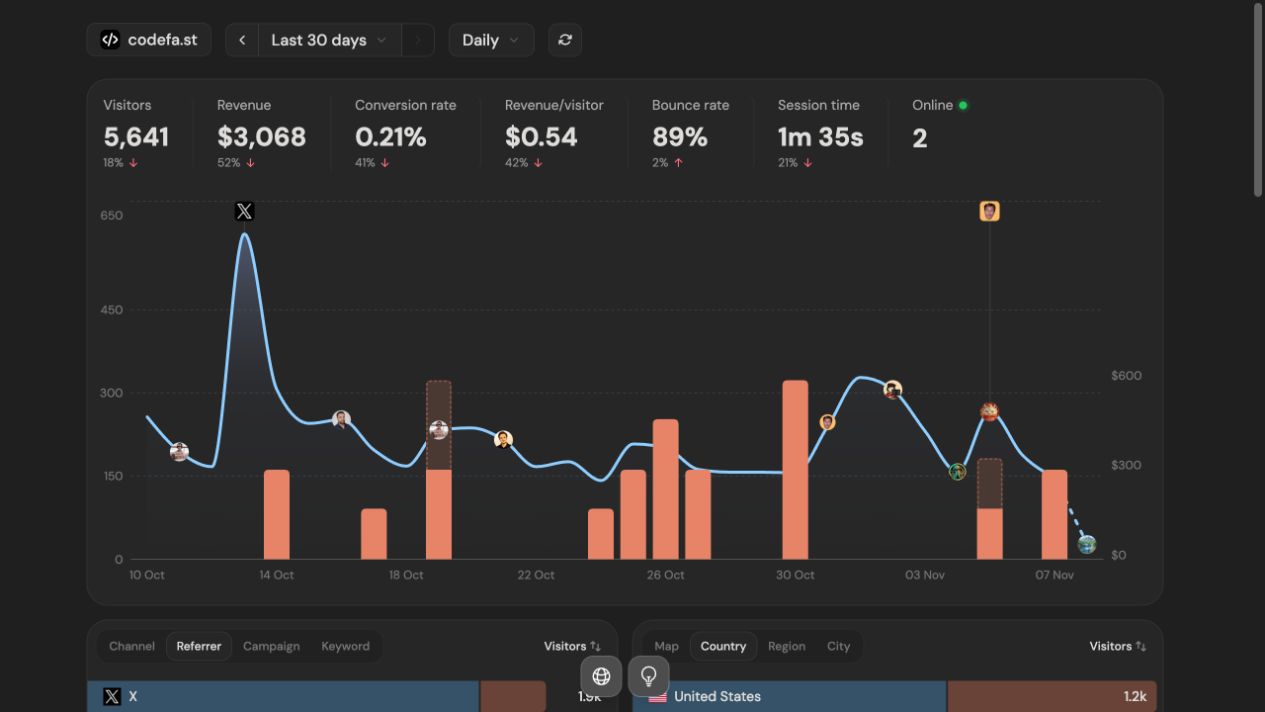
Choose it if operating your own deployment is the problem you want to remove. The event-based subscription still needs pricing at your expected usage.
2. Seline: when visitor journeys matter
Seline connects Stripe or Polar, or accepts custom revenue events, alongside visitor journeys. That makes it a candidate when you want to inspect the path from acquisition to payment in a managed product.
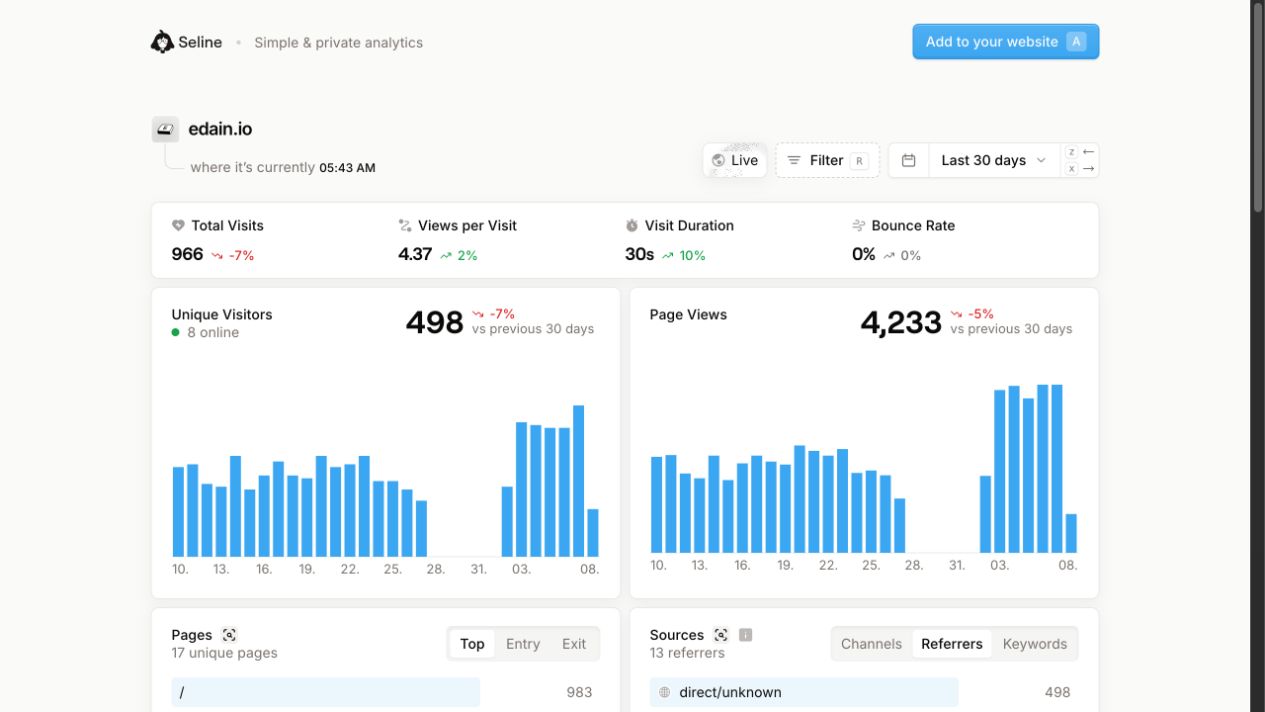
A custom event route is not the same as a native Paddle webhook connector. Validate the engineering work before choosing it for an unsupported provider. Source: Seline revenue tracking.
3. Grosslytics: when Paddle or Razorpay is the blocker
Grosslytics has dedicated webhook handlers for Paddle, Razorpay and Lemon Squeezy as well as Stripe and other providers. Checkout integration still matters: Paddle needs visitor metadata in custom data, and Razorpay needs it in order or payment notes.
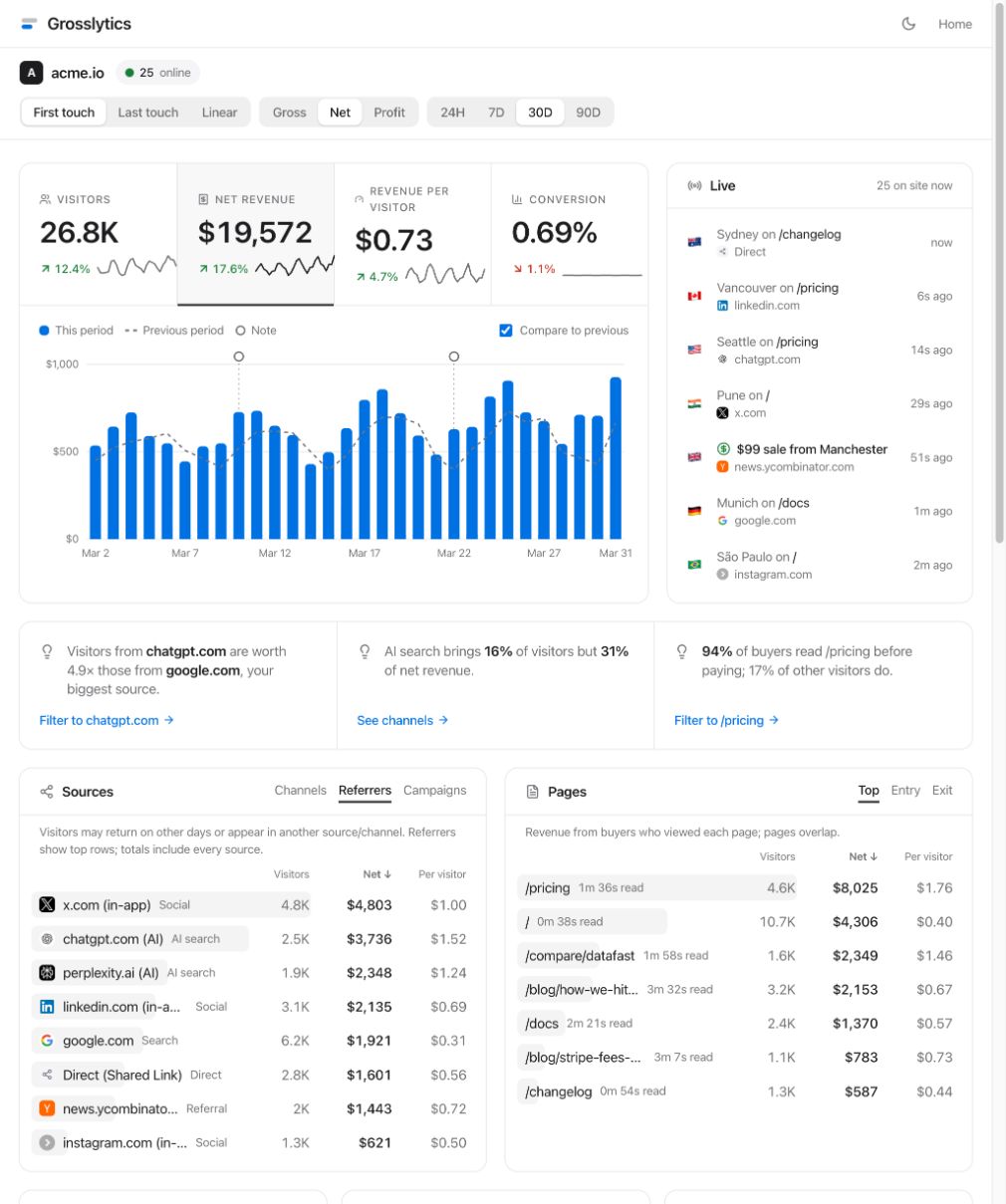
Grosslytics estimates Stripe fees using a configured schedule and subtracts ad spend you enter or import. Its profit view excludes payroll, hosting and other operating costs; full Stripe refunds are handled, but partial Stripe refunds are not automatically deducted.
Use the payment setup guide to test the integration, rather than assuming every provider has identical renewal and refund behavior.
4. Umami: when you want to own the instrumentation
Umami records revenue through event properties, which lets you connect a payment pipeline you control. Its documented revenue event includes an amount and currency.
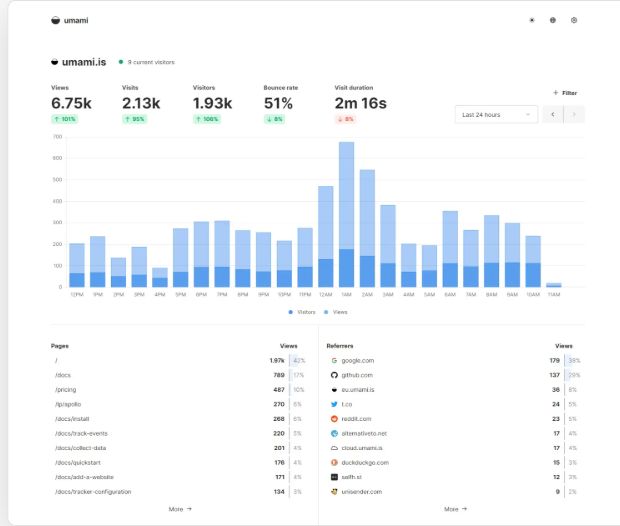
Umami Cloud also advertises hourly payment and refund sync for Stripe, Paddle, Polar, Dodo Payments, WooCommerce and Lemon Squeezy. Check plan eligibility and which features apply to self-hosting before treating it as a DIY-only option. Sources: Cloud payment integrations and revenue events.
5. PostHog: when revenue is one part of product analysis
PostHog is worth considering when acquisition questions sit alongside activation, retention and product behavior. Its payment-platform documentation currently identifies Stripe as the supported revenue source.
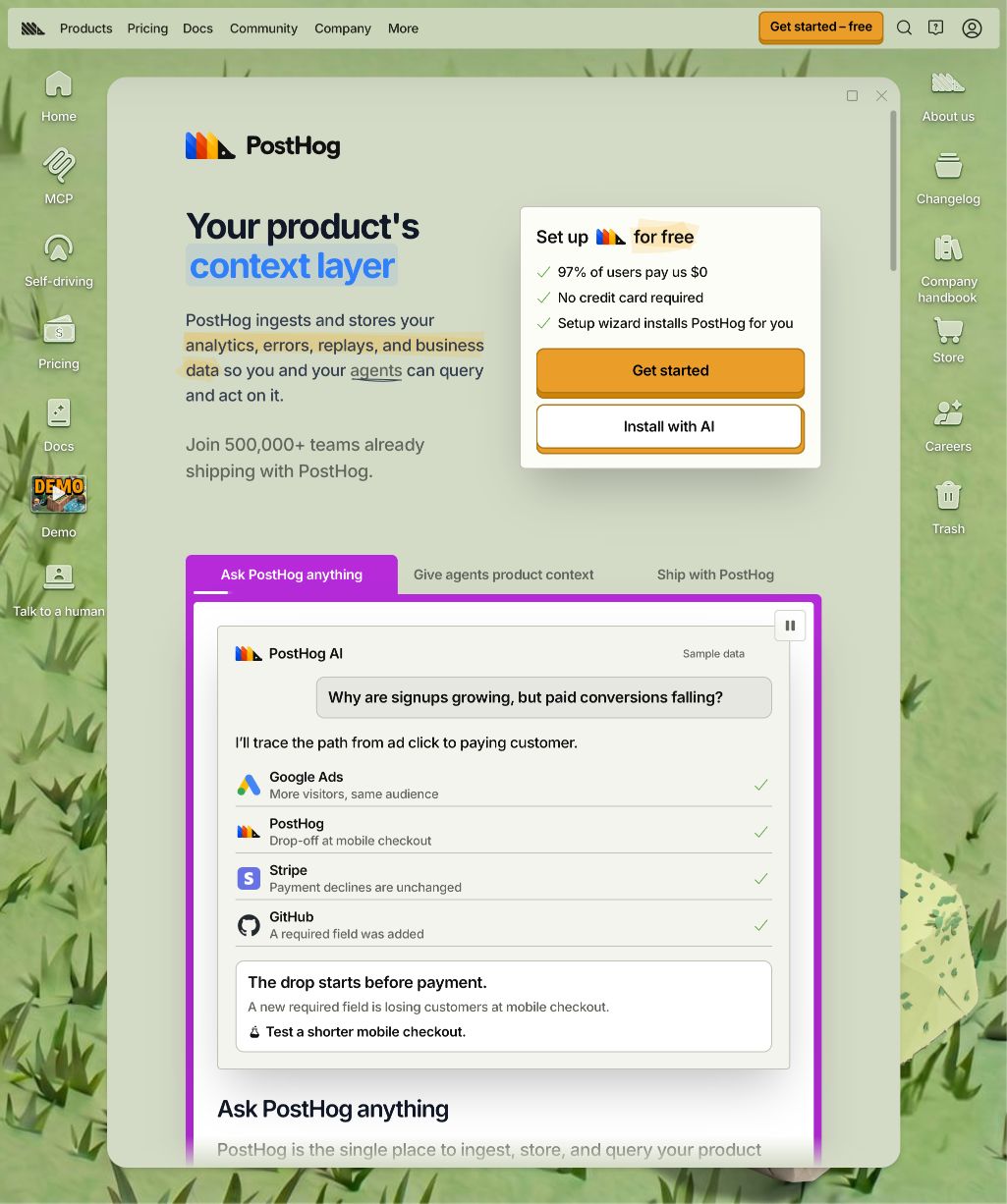
It can be more work than a small attribution dashboard, but replacing an existing PostHog setup may create duplicate instrumentation. Source: payment platform support.
How do attribution models change a channel’s revenue?
A model changes which source receives credit for a payment, without changing the amount paid.
Suppose someone first arrives from a newsletter, later visits through an ad and then buys for $100. First touch credits the newsletter; last touch credits the ad; Grosslytics’ endpoint split assigns $50 to each.
payment = 100
first_touch = newsletter: 100
last_touch = ad: 100
endpoint_split = newsletter: 50, ad: 50
That split does not distribute credit across every intermediate visit. See the dashboard definitions before treating it as a full-journey multi-touch model.
What does the lower license price actually save?
The listed Grosslytics Lifetime price is $20 below DataBull’s $49 self-hosted license, before infrastructure and operating work.
The arithmetic is $49 − $29 = $20; free source self-hosting removes the Grosslytics software-license charge altogether. Compare deployment effort, update handling and support as well as price. Source: DataBull license pricing.
Hosting cost and query latency depend on traffic, query shape and database usage; neither follows directly from the license price.
What should you test before leaving DataBull?
Test the candidate against your real checkout and the lifecycle events that affect your decisions.
- Send a tagged visitor through your actual payment provider.
- Confirm the correct source, amount and currency.
- Trigger a renewal and inspect how it is credited.
- Check full and partial refunds separately.
- Compare the normal month, a traffic spike and your maintenance cost.
Keep the tool that answers the required revenue question with acceptable upkeep. Next, run that checklist against one candidate before changing your production tracker.
Frequently asked questions
Does DataBull support first-touch attribution?
Yes. Its documentation lists first touch, last touch and last non-direct. Evaluate a replacement on the model or integration you actually lack.
Which alternative supports Paddle and Razorpay webhooks?
Grosslytics has provider-specific webhook handlers for both. Configure visitor metadata and test the complete payment lifecycle; refund support differs by gateway.
Is $29 the only way to self-host Grosslytics?
No. Self-hosting from source is free; the listed $29 Lifetime option adds installation convenience, support and a commercial license. Cloudflare usage remains separate.